The HoloCare Story: How the Intervention Centre helped bring holographic liver surgery planning to patients

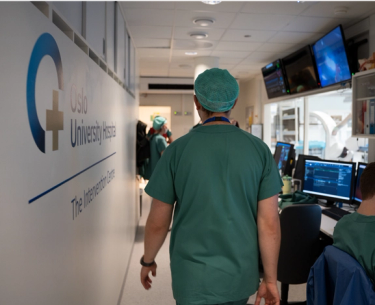
When Microsoft launched the HoloLens mixed-reality headset in 2016, a question emerged at the Intervention Centre at Oslo University Hospital: could this new technology change the way surgeons plan and perform complex operations? The answer would take years of clinical research, close collaboration, and public-private partnership to uncover — and would ultimately lead to a CE-marked medical device deployed in hospitals across Europe. This is the story of how mixed reality moved from concept to the operating room.
Written by
Egidijus Pelanis
Oslo University Hospital
A clear clinical problem
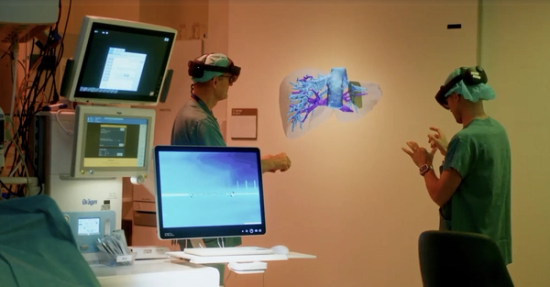
In 2016, when Microsoft launched the HoloLens mixed-reality headset, the Intervention Centre partnered with Sopra Steria — who had obtained one of the first HoloLens devices in Europe — to explore whether mixed reality could improve surgical planning and execution. The clinical problem was clear: many critical surgical decisions still rely on interpreting 2D black-and-white CT and MRI images, which leaves room for differing interpretations, especially in complex anatomy such as the liver, the heart, and skeletal deformities.
The project was organised as a long-running public-private research collaboration between clinicians at Oslo University Hospital and other hospitals in the region, technology specialists at Sopra Steria, and the Intervention Centre as the integrating R&D environment with multidisciplinary experts. Out of this work, the spin-off company HoloCare AS was established in 2019 to commercialise the technology, and the collaboration has since received substantial public funding, including grants from the South-Eastern Norway Regional Health Authority (Helse Sør-Øst), the Research Council of Norway, and the European Health and Digital Executive Agency.

The testbed role
The Intervention Centre served as the clinical and technological testbed for the project. Its contribution spanned the full development journey: clinical needs assessment together with surgeons in liver, cardiology, and orthopaedic surgery; preclinical and feasibility studies of the HoloLens-based workflow; development and evaluation of AI-based segmentation pipelines that turn CT scans into interactive 3D holograms; usability and workflow studies in the operating room; and the design and execution of clinical research studies that supported HoloCare's CE-mark certification. The Intervention Centre also provided a multidisciplinary research team and the regulated infrastructure required for regulatory studies.
The work brought together clinical and technical research from the Intervention Centre and clinical expertise from the Department of Hepatopancreatobiliary Surgery, both at Oslo University Hospital. On the industry side, Sopra Steria acted as the original technology partner, HoloCare AS as the spin-off commercialising the technology, and Microsoft contributed as a technology partner.
A collaboration built on trust
The collaboration has been highly productive and is one of the Intervention Centre's flagship examples of how clinicians, technologists, and industry can co-develop a medical device from the very earliest concept all the way to a CE-marked, commercially deployed product. Working side-by-side — clinicians articulating real surgical needs, engineers iterating on prototypes in the labs near operating rooms — allowed the team to move fast while maintaining rigorous safety and quality standards. The long-term, trust-based nature of the partnership has been essential to its success.
Results that changed the picture
The testing delivered clear insight. Studies in liver, cardiac, and orthopaedic surgery showed that mixed-reality 3D holograms improved surgeons' spatial understanding of complex anatomy compared with conventional 2D imaging, supporting more precise pre-operative planning and clearer team communication.
"With 2D we all look at it differently, using 3D we all see the same thing."
— Dr. Bjørn Edwin, Professor of Surgery, The Intervention Centre, Oslo University Hospital
The technology was peer-reviewed in international journals, and research results contributed to HoloCare receiving CE mark approval (Class I and subsequently Class IIb under the MDR), enabling commercial roll-out in hospitals across Europe and the UK.
"The surgical team gets a more aligned and spatially accurate view of the patients' anatomy using holograms."
— Dr. Henrik Brun, Pediatric cardiologist, The Intervention Centre, Oslo University Hospital
Lessons for others
Several lessons stand out from the project. Involve clinicians from day one and let real clinical needs drive the technology, not the other way around. Plan for the regulatory pathway early — CE/MDR documentation should start in the research phase, not afterwards. And treat the partnership as a long-term relationship rather than a single project, because medical devices typically need several years of iteration before they reach the patient.
The recommendation to companies considering testing with the Intervention Centre is to engage early — even at concept stage — so that clinical insight, infrastructure, and regulatory thinking can be built into the product from the start.
"I'm very proud to be partnering with incredible hospitals and research partners in our mission to advance medical imaging, and improve patient outcomes in surgery."
— Alison Sundset, CEO of HoloCare