Drones Streamline Emergency Medical Services with Early Situational Awareness

The overall goal of the PreViS project is to develop advanced video-based decision support, strengthen innovation in prehospital care, and improve equitable access to emergency services.
About the project
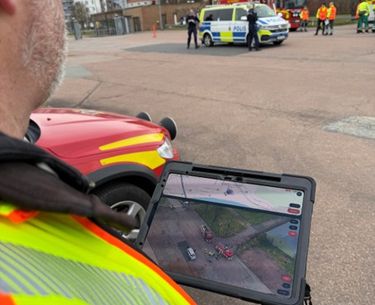
Within the project PreViS (Prehospital Video in Collaboration), autonomous drones have been used to provide the emergency dispatch center with early situational awareness.
By deploying drones upon an alarm, healthcare services receive an overview of the incident at an early stage and can quickly get a handle on the situation.
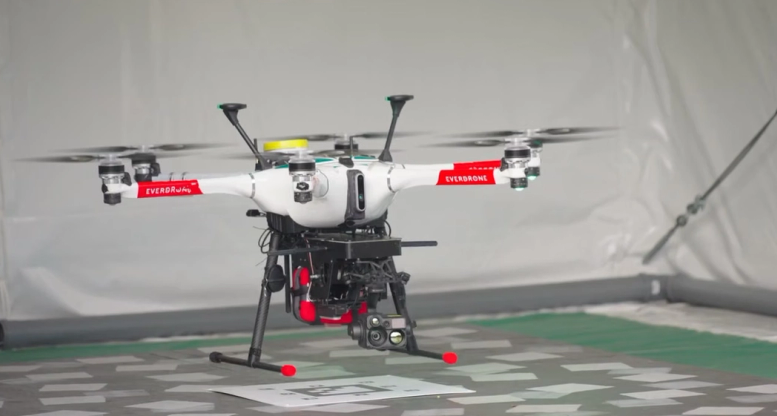
Since 2022, a project has been underway in the Västra Götaland Region in collaboration with the Emergency Medical Dispatch Center VGR, Karolinska Institutet, and Everdrone. The aim is to improve survival rates in out-of-hospital cardiac arrest (OHCA) by using drones to deliver automated external defibrillators (AEDs) directly to patients.
With the PreViS 2 project, the initiative expanded to include real-time video capability, enabling early situational awareness in emergency response.
In February 2025, live operations began with a drone based in Mölndal. The system provides real-time video to the HEMS coordinator, allowing a shared situational picture to be quickly distributed to responding units to improve coordination and decision-making.
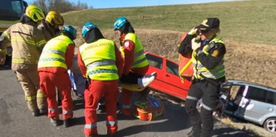
After around ten training exercises, the system was successfully integrated into operations and has been used in incidents such as traffic accidents, fires, drownings, and AED deliveries. During 2025, drones supported 42 emergency calls by providing visual information that enabled faster and more accurate assessments.
This capability is the result of close collaboration between Region Västra Götaland, the Dispatch Center, Everdrone, and the Greater Gothenburg Fire and Rescue Service.
Interest has grown across the region and internationally. Since spring 2026, the system has expanded to Uddevalla, Trollhättan, Vänersborg, and Borås, with Skövde planned for summer 2026.

A strong collaboration
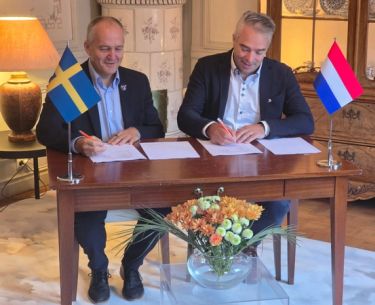
The collaboration has been strong and goal-oriented, bringing together Region Västra Götaland, the Emergency Medical Dispatch Center, Everdrone, Karolinska Institutet, and the Greater Gothenburg Fire and Rescue Service. Each partner has contributed complementary expertise, enabling successful integration of drone technology for AED delivery and real-time situational awareness.
The project has also faced challenges, including regulatory constraints, airspace and safety requirements, and coordination with existing emergency systems. These have required continuous dialogue and adaptation.
At the same time, the collaboration has been dynamic, identifying new use cases and supporting regional expansion. Overall, it has been a key success factor, balancing innovation with safety and creating a strong foundation for future development.
Key insights from the project
The testing provided several key insights, particularly the difficulty of interpreting live video by nurses at the Emergency Medical Communication Center. While valuable, effective use of visual information requires training and experience.
This highlighted the need for a structured video library with material from both training and real incidents to support education and improve real-time decision-making.
A crucial enabler has been the legal framework. The center’s existing camera surveillance permit was extended to allow storage of video streams, provided privacy-sensitive content is anonymized within 72 hours or otherwise deleted.
Overall, the testing revealed not only technical and operational challenges but also the need for structured training, clear methods, and secure handling of sensitive data.
The project provided key lessons and opportunities.
While real-time drone video improves situational awareness, it is challenging to interpret in acute settings and requires training. This led to the creation of a video library from exercises and real incidents to support learning and decision-making.
A major takeaway is the value of cross-sector collaboration, combining clinical, operational, technical, and research expertise to implement new solutions. The project also provided experience in handling regulatory, safety, and data protection requirements essential for scaling.
New opportunities have emerged through dual-use applications, supporting both AED delivery and enhanced situational awareness. We also learned the importance of early, open collaboration, flexibility in addressing challenges, investment in training, and secure handling of sensitive data.
Overall, with the right approach, such collaboration can drive meaningful innovation and real operational value.